
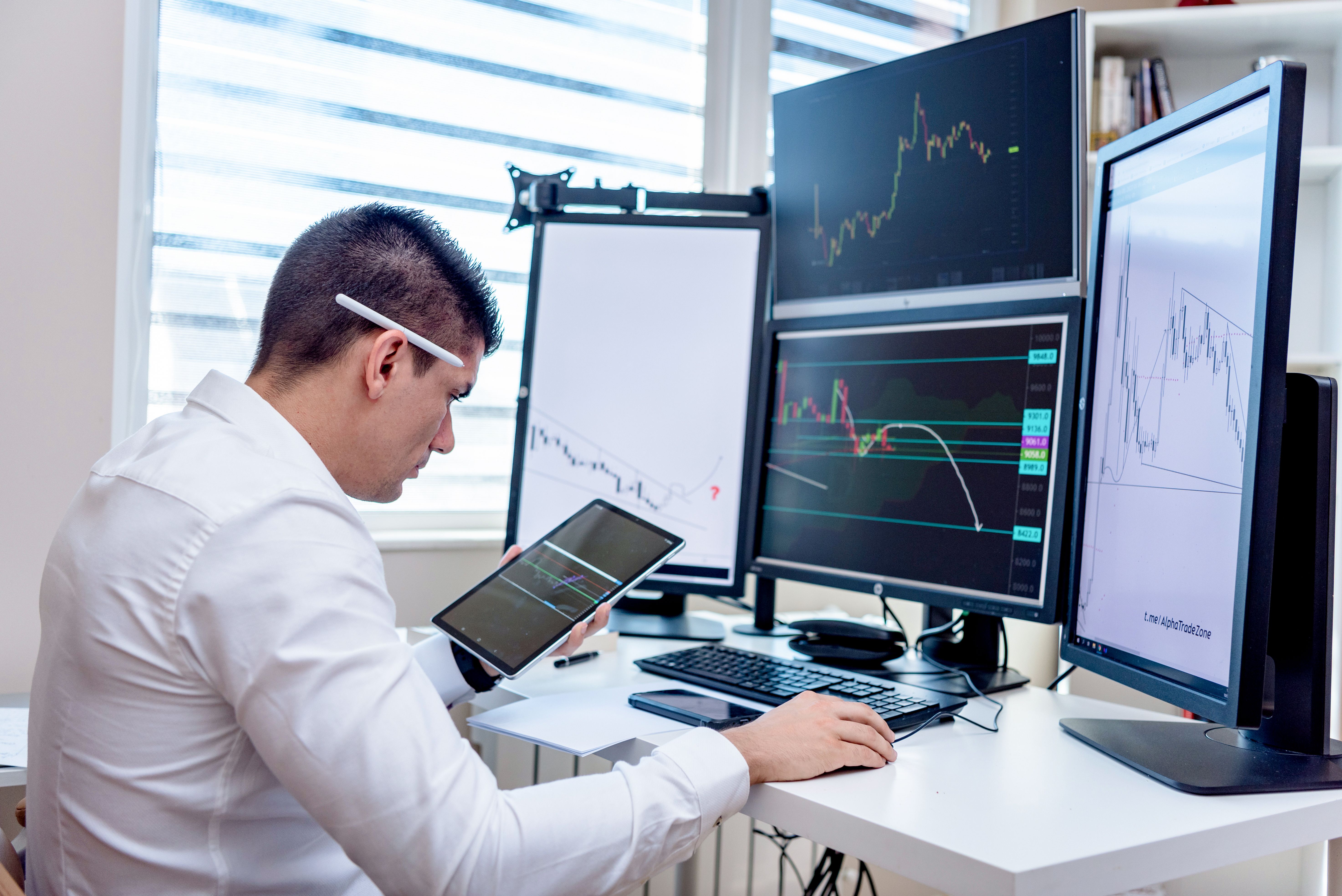
Most traders assume that better results come down to better instincts. The reality, however, is that the method behind a decision often matters more than the decision itself. That tension sits at the heart of the debate between algorithm-driven investing and manual trading.
Both approaches aim for the same outcome, but they solve the problem differently. Understanding where they diverge is the first step toward knowing which fits a given strategy.
Algorithm-Driven Investing vs Manual Trading
Algorithmic trading runs on predefined rules, executing orders automatically when conditions are met. Manual trading, by contrast, depends on human judgment at every step, from analysis to execution.
The two approaches aren’t competing for the same space. Algorithmic trading handles speed and scale, while traditional trading handles nuance and context. For most traders, the real question isn’t which is superior, but which trading strategy fits the problem they’re actually trying to solve.
| Factor | Algorithmic Trading | Manual Trading |
| Execution Speed | Milliseconds | Seconds to minutes |
| Emotional Bias | None | Present |
| Scalability | High | Limited |
| Adaptability | Rule-bound | Flexible |
| Consistency | High | Variable |
Where Algorithms Outperform Human Traders
Algorithmic systems differ most from manual trading when a trader translates a market idea into codified entry, exit, and risk rules. That translation is where these algorithmic trading strategies demonstrate their clearest structural advantages over discretionary methods.
Speed, Scale, and Rule Consistency
Algorithmic systems process market data and trigger orders in milliseconds, a window no human trader can match consistently. That execution speed matters most in liquid markets where price moves quickly and hesitation translates directly into slippage.
Beyond raw speed, algorithms monitor multiple markets simultaneously without fatigue or distraction. A single system can scan dozens of instruments, apply the same logic to each, and execute without deviation, something a manual trader managing even two positions at once will struggle to replicate reliably.
Rules-based execution also reinforces risk management in ways that discretionary trading rarely achieves consistently. When the logic dictates a stop, the system applies it. There is no second-guessing, no holding a losing position out of hope, and no inconsistency between what the plan says and what gets executed.
Platforms like QuantConnect and TradingView have made this level of automation accessible to retail traders, though it is worth noting that retail automation operates differently from high-frequency trading. The latter relies on co-location, proprietary infrastructure, and latency advantages unavailable to individual traders.
What Backtesting Can and Cannot Prove
Backtesting allows traders to run strategies against historical data before committing real capital, which is a meaningful advantage when refining entry and exit logic.
The limitation, however, is overfitting. A strategy tuned too precisely to past data may reflect historical noise rather than a repeatable edge, performing well in testing and poorly in live conditions. That distinction matters before drawing any firm conclusions from a backtest.
Where Manual Trading Still Has an Edge
While algorithmic systems excel at speed and consistency, they are not well-suited to every market condition. Adaptability becomes especially important when conditions stop resembling historical patterns, and that is precisely where human judgment tends to reassert its value.
Reading Context That Rules May Miss
Algorithms follow predefined logic, which is precisely what makes them predictable and precisely what limits them when markets behave in unexpected ways. A breaking news event, a sudden shift in central bank tone, or a low-volume session with erratic price action can all produce conditions that fall outside the parameters a system was built to handle.
Human judgment fills that gap. A discretionary trader can recognize when the usual patterns don’t apply and hold back, adjust position sizing, or exit early without rewriting a single line of code. That real-time adaptability is something no backtested trading strategy can fully replicate, because it depends on reading context, not just conditions.
The Cost of Discretion and Emotional Bias
That flexibility, however, carries a significant trade-off. Emotional bias is the persistent challenge in manual trading, and it surfaces in predictable ways: holding losers too long, cutting winners too early, and deviating from a plan under pressure.
Fatigue compounds the problem. Unlike automated systems, human judgment degrades across long sessions, making risk management inconsistent in ways that are difficult to self-monitor in real time. Traditional trading rewards traders who can maintain discipline when their instincts are loudest. For those who can, discretion is an asset. For those who struggle with consistency, the same flexibility becomes a liability.
Costs, Tools, and Skills for Each Path
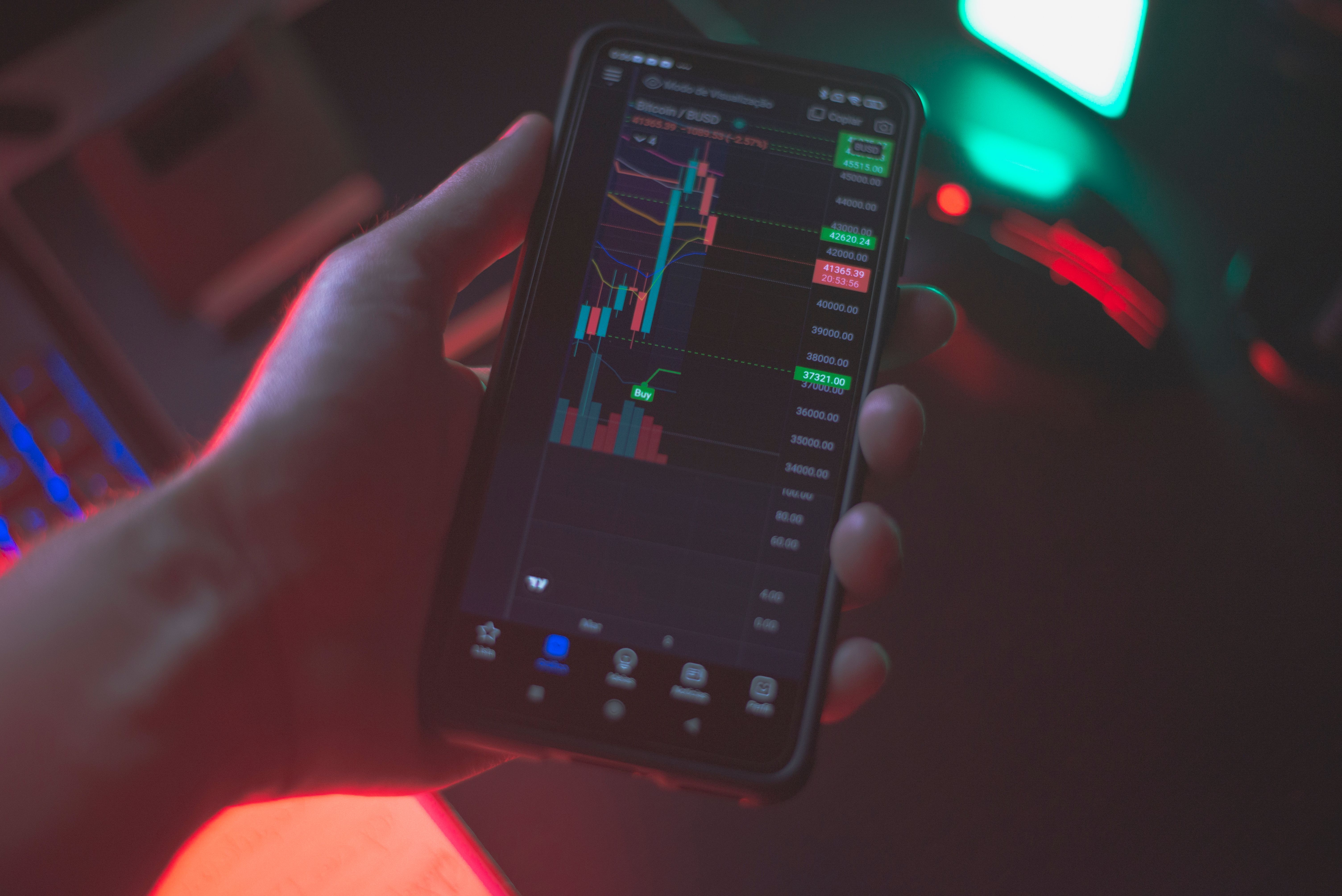
Choosing between algorithmic trading and manual trading isn’t only a strategic decision; it’s also a practical one. Each path carries distinct requirements in software, knowledge, and ongoing effort that affect whether either approach is actually sustainable.
Algorithmic trading typically requires access to data feeds, a backtesting environment, and either coding knowledge or a no-code platform that can translate logic into rules. Python is the most widely used language for building and testing strategies, though traders without a development background often start with platforms like TradingView, which offer scripting tools at lower entry points. Monitoring systems, updating logic after market changes, and managing infrastructure all add to the ongoing workload beyond initial setup.
Manual trading carries its own costs. Charting platforms, reliable data access, and significant screen time are standard requirements. Market knowledge needs to be current and applied consistently, and emotional discipline functions as an ongoing skill, not a one-time achievement. For traders who find active management demanding, passive investing through index funds offers a lower-maintenance alternative worth understanding.
The real comparison between the two paths includes learning curve and maintenance costs, not just trade outcomes.
Why Many Traders Use a Hybrid Approach
The choice between algorithmic trading and manual trading is rarely as binary as it first appears. Many intermediate traders settle into a hybrid approach that draws the practical strengths from both methods.
In a typical hybrid setup, automation handles the mechanical work: scanning for setups, triggering alerts, or executing entries based on predefined criteria. Human judgment then steps in to evaluate context, override signals that don’t fit current conditions, or adjust position sizing based on factors a rule set wouldn’t capture. This structure directly addresses the emotional bias problem without removing discretion entirely. The algorithm enforces consistency where consistency is measurable, while the trader applies nuance where the data alone falls short. For anyone exploring the future of digital asset trading, hybrid models represent a practical middle ground that balances risk management with adaptability.
The Better Choice Depends on Your Decision Style
Algorithmic trading favors consistency, speed, and scale. It removes emotional bias from execution and applies rules uniformly, which makes it well-suited to traders who can define their edge precisely and want that edge applied without deviation.
Manual trading, or traditional trading, favors contextual interpretation. It rewards traders who can read conditions that fall outside predefined parameters and adjust in real time without requiring a system rebuild.
Neither approach is universally superior. The right fit depends on a trader’s constraints, skills, and tolerance for the specific risks each method introduces. The Knight Capital failure remains a pointed reminder that automation without adequate oversight carries its own category of risk. For many traders, a hybrid approach that pairs algorithmic consistency with human judgment offers the most grounded path forward.
 Benjamin Petronelsoner writes the kind of expert financial advice content that people actually send to each other. Not because it's flashy or controversial, but because it's the sort of thing where you read it and immediately think of three people who need to see it. Benjamin has a talent for identifying the questions that a lot of people have but haven't quite figured out how to articulate yet — and then answering them properly.
They covers a lot of ground: Expert Financial Advice, Wealth Management Strategies, Personal Finance Tips, and plenty of adjacent territory that doesn't always get treated with the same seriousness. The consistency across all of it is a certain kind of respect for the reader. Benjamin doesn't assume people are stupid, and they doesn't assume they know everything either. They writes for someone who is genuinely trying to figure something out — because that's usually who's actually reading. That assumption shapes everything from how they structures an explanation to how much background they includes before getting to the point.
Beyond the practical stuff, there's something in Benjamin's writing that reflects a real investment in the subject — not performed enthusiasm, but the kind of sustained interest that produces insight over time. They has been paying attention to expert financial advice long enough that they notices things a more casual observer would miss. That depth shows up in the work in ways that are hard to fake.
Benjamin Petronelsoner writes the kind of expert financial advice content that people actually send to each other. Not because it's flashy or controversial, but because it's the sort of thing where you read it and immediately think of three people who need to see it. Benjamin has a talent for identifying the questions that a lot of people have but haven't quite figured out how to articulate yet — and then answering them properly.
They covers a lot of ground: Expert Financial Advice, Wealth Management Strategies, Personal Finance Tips, and plenty of adjacent territory that doesn't always get treated with the same seriousness. The consistency across all of it is a certain kind of respect for the reader. Benjamin doesn't assume people are stupid, and they doesn't assume they know everything either. They writes for someone who is genuinely trying to figure something out — because that's usually who's actually reading. That assumption shapes everything from how they structures an explanation to how much background they includes before getting to the point.
Beyond the practical stuff, there's something in Benjamin's writing that reflects a real investment in the subject — not performed enthusiasm, but the kind of sustained interest that produces insight over time. They has been paying attention to expert financial advice long enough that they notices things a more casual observer would miss. That depth shows up in the work in ways that are hard to fake.