
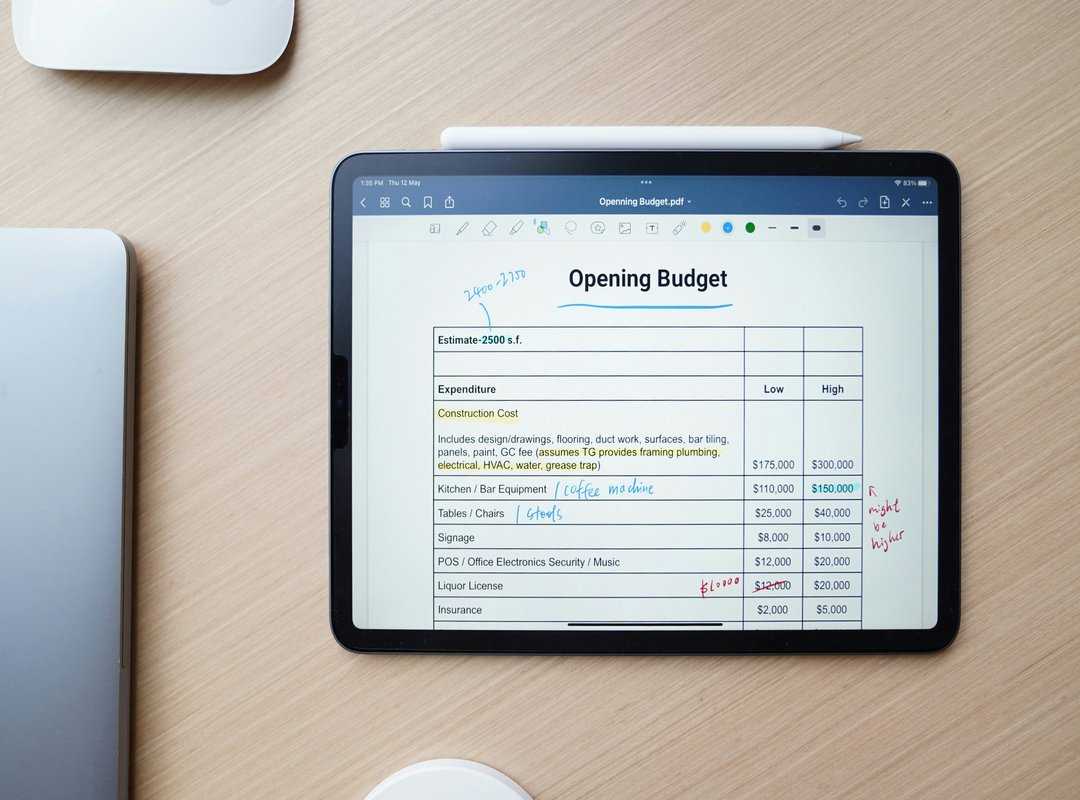
You’re staring at a spreadsheet that’s already wrong.
Revenue dropped 12% last week. Your COGS spiked. A key client paused renewal.
And your budget? Still locked in from January.
That’s not planning. That’s guessing with extra steps.
I’ve watched finance teams drown in static models while the real world moves faster than their quarterly review cycle.
It’s exhausting. It’s unnecessary. And it’s why I stopped trusting traditional budgeting years ago.
I’ve helped mid-market SaaS, manufacturing, and service firms rip out those rigid plans and replace them with something that breathes.
Not spreadsheets updated every 90 days. Not dashboards that show yesterday’s data as if it’s gospel.
Flexible Budgeting Aggr8budgeting by Aggreg8 means your numbers adjust when reality does (not) when your calendar says they should.
Automated data pulls. Scenario modeling by role. Forecasting that updates daily, not quarterly.
No buzzwords. Just responsiveness.
I’ve seen it work across messy, real companies. Not case studies written by marketing.
This isn’t theory. It’s what happens when you stop fighting change and start building around it.
You’ll get exactly how it works. Where it fails. And where it saves real time and cash.
No fluff. No jargon. Just what actually delivers.
Why Static Budgets Break Down (And) Where They Fail First
I watched a $2.4M marketing overspend go unnoticed for 22 days.
CRM said leads were up. ERP said spend was flat. Finance saw neither report until month-end close.
That’s not a data problem. That’s a process problem.
Delayed variance analysis is the first crack. If you’re waiting longer than 10 days to spot a miss, you’re already reacting. Not leading.
Then comes the second failure: you see the number but can’t trace it. Was it CAC spiking? Or churn accelerating?
Or both? Static budgets don’t surface driver-level causes. They just yell “over” or “under.”
Third: manual reforecasting. Someone copies numbers into Excel. Hits F9.
Prays. Takes three days. By then, the quarter’s half-gone.
Rolling forecasts sound smart (until) you realize they’re just old spreadsheets on a timer. No guardrails. No anomaly detection.
Just more work, same delays.
Before: decision latency was 17 days. After: 36 hours.
Aggr8budgeting fixed that for us.
It’s not magic. It’s Flexible Budgeting Aggr8budgeting by Aggreg8. Real-time variance alerts tied to source systems, not snapshots.
You get the why, not just the what.
No more firefighting.
You adjust before the fire starts.
Pro tip: if your budget tool doesn’t auto-flag a 12% CAC jump in under 4 hours, it’s already obsolete.
How Aggreg8 Cuts the Budgeting Grind
I set up adaptive budgeting for a SaaS company last month. Their finance manager used to spend 14 hours a week updating spreadsheets. Now it’s under 90 seconds.
Here’s how it actually works.
Live data connectors pull from Stripe, NetSuite, HubSpot. No manual exports. Ever.
Rule-based threshold triggers fire automatically. Like: flag if CAC rises >12% MoM. You type that in plain English.
No coding. (Yes, really.)
Then changing scenario propagation kicks in. Change one assumption? It ripples across every related forecast.
Revenue, headcount, churn impact. All at once.
One-click versioned what-if reports let you compare options side-by-side. With timestamps. With audit trails.
Without saving ten different Excel files named “v3FINALreally_final.”
Want to track payroll cost per active user? You pick “Payroll” and “Active Users” from dropdowns. Set your alert threshold.
Hit save. Done.
What doesn’t auto-magically happen? Strategic calls. Pricing shifts.
Market entry timing. Those stay human-reviewed. But get stress-tested instantly against live data.
Raw data → anomaly flag → pre-built dashboard → team comments → revised forecast. All under 90 seconds.
That’s not theory. I watched it happen live.
Flexible Budgeting Aggr8budgeting by Aggreg8 is the only system I’ve used where the finance team stopped dreading Monday morning.
Real Teams, Real Results: 90 Days, Not 90 Weeks
I watched a SaaS company cut forecast error from ±23% to ±6.8% in under three months.
They didn’t hire consultants. They didn’t rip out their ERP.
They turned on weekly pipeline-to-revenue lag analysis. And stopped writing variance commentary by hand.
A distributor slashed month-end close from 11 days to 4.5.
How? They mapped GL codes to client-tier segments (Enterprise, Mid-Market, SMB) and auto-tagged every invoice.
No spreadsheets. No frantic Friday calls.
A professional services firm lifted margin visibility by 41% across 17 practice areas.
They enabled auto-generated narrative summaries instead of manual PDFs nobody read.
Here’s what people don’t believe until they try it: all three teams spent less than eight hours setting this up.
Zero IT tickets. Zero new logins. Zero training sessions.
You’re thinking: “That sounds too fast.”
It is fast. Because the slow part isn’t the tool (it’s) the habit of explaining numbers in paragraphs.
The biggest win wasn’t accuracy. It was stopping the ritual of justifying bad data with worse words.
Aggr8budgeting Financial News by Aggreg8 shows how often finance teams still do that.
Flexible Budgeting Aggr8budgeting by Aggreg8 works because it replaces explanation with detection.
Try turning on one auto-summary rule next week.
Then tell me you still need a meeting to talk about variance.
What Most Budgeting Tools Miss (And) Why Adaptability Isn’t Just

I built a budget last year that looked perfect on paper. Then the supply chain hiccup hit. Then the pricing test flopped.
Then the key hire ghosted us.
My spreadsheet didn’t blink. It just kept showing the same number like nothing happened.
That’s the gap: most tools improve for accuracy at a point in time. Not resilience across uncertainty. Big difference.
Flexible Budgeting Aggr8budgeting by Aggreg8 handles it differently. Every line item comes with a range (not) a single number. Q3 revenue isn’t $1.42M.
It’s $1.2M ($1.58M) (85% confidence). That’s not guesswork. It’s math baked into the model.
You see the full spread. You adjust assumptions. You don’t rewrite everything from scratch.
The impact heat map shows what actually moves the needle. Pricing changes? High sensitivity, high controllability.
Office expansion? Low sensitivity, low controllability. So you stop wasting time on levers that barely matter.
And no (you) don’t lose auditability. Every revision is timestamped. Attributed.
Tied to the exact data snapshot it used.
I’ve handed these files to external auditors. They asked fewer questions. Not more.
Why? Because uncertainty isn’t hidden. It’s surfaced.
Quantified. Managed.
Most tools pretend volatility doesn’t exist. This one assumes it will.
Getting Started Without Breaking Anything
I set up Aggreg8 for a client last month. They used Oracle Financials, Snowflake, and had one analyst who knew Excel pivot tables better than her coffee order.
Three things you need:
- Read-only API access to your core financial system
- Admin rights to a cloud data warehouse (or use Aggreg8’s sandbox)
Day 1: Connect your first data source. Day 3: Run your first automated variance report. Day 7: Publish your first adaptive forecast to leadership.
No legacy migration. No chart-of-accounts overhaul. Just map your existing fields to Aggreg8’s semantic layer.
It’s not magic. It’s just less friction than you expect.
Flexible Budgeting Aggr8budgeting by Aggreg8 works because it respects what you already have.
You don’t rebuild your stack. You plug in.
Need the rules spelled out? The Aggr8budgeting Finance Guideline From Aggreg8 covers exactly how.
Your Next Forecast Starts Now
Stale numbers kill momentum. You know it. You’ve sat through meetings where the budget data is already wrong.
I’ve been there too. Watching teams waste 11+ hours a week chasing updates instead of acting.
That’s why Flexible Budgeting Aggr8budgeting by Aggreg8 exists.
It cuts the spreadsheet churn. No more waiting for month-end to see what’s really happening.
Pick one volatile line right now. Customer acquisition. Freelance labor.
Cloud spend. Just one.
Open the wizard. Flip the switch. Done.
You don’t need permission. You don’t need a committee.
Your next forecast shouldn’t wait for month-end. It should start now.
Go do it.
 Clifton Seilerance is the kind of writer who genuinely cannot publish something without checking it twice. Maybe three times. They came to investment strategies and insights through years of hands-on work rather than theory, which means the things they writes about — Investment Strategies and Insights, Wealth Management Strategies, Budgeting and Saving Techniques, among other areas — are things they has actually tested, questioned, and revised opinions on more than once.
That shows in the work. Clifton's pieces tend to go a level deeper than most. Not in a way that becomes unreadable, but in a way that makes you realize you'd been missing something important. They has a habit of finding the detail that everybody else glosses over and making it the center of the story — which sounds simple, but takes a rare combination of curiosity and patience to pull off consistently. The writing never feels rushed. It feels like someone who sat with the subject long enough to actually understand it.
Outside of specific topics, what Clifton cares about most is whether the reader walks away with something useful. Not impressed. Not entertained. Useful. That's a harder bar to clear than it sounds, and they clears it more often than not — which is why readers tend to remember Clifton's articles long after they've forgotten the headline.
Clifton Seilerance is the kind of writer who genuinely cannot publish something without checking it twice. Maybe three times. They came to investment strategies and insights through years of hands-on work rather than theory, which means the things they writes about — Investment Strategies and Insights, Wealth Management Strategies, Budgeting and Saving Techniques, among other areas — are things they has actually tested, questioned, and revised opinions on more than once.
That shows in the work. Clifton's pieces tend to go a level deeper than most. Not in a way that becomes unreadable, but in a way that makes you realize you'd been missing something important. They has a habit of finding the detail that everybody else glosses over and making it the center of the story — which sounds simple, but takes a rare combination of curiosity and patience to pull off consistently. The writing never feels rushed. It feels like someone who sat with the subject long enough to actually understand it.
Outside of specific topics, what Clifton cares about most is whether the reader walks away with something useful. Not impressed. Not entertained. Useful. That's a harder bar to clear than it sounds, and they clears it more often than not — which is why readers tend to remember Clifton's articles long after they've forgotten the headline.